About Flyora
Flyora is a product and engineering studio.
We design and build digital products, analytical tools and intelligent systems.
Curiosity with discipline
We are comfortable exploring unfamiliar problems and technologies, but exploration has to lead somewhere.
Before building, we try to understand the problem and the conditions the product has to work within. A new technology earns its place only when it makes the result more useful, reliable or understandable.
Claims should be supported by evidence, and complexity needs a reason to exist.
Simplicity is earned
Products that feel simple are often difficult to build.
We take on that complexity behind the scenes so that it does not become the user's problem. What remains should feel clear, precise and dependable.
This usually means building less, making decisions explicit and removing work that the technology can handle reliably.
Progress from within
People bring different goals, circumstances and reasons for wanting to change. Useful technology should respect that.
Flyora does not define what progress should mean for someone. Technology should help people understand where they are and decide what to do next, without prescribing a single version of progress.
Feedback should inform rather than judge. It should leave the person with more understanding and agency, not make them dependent on the product.
The right next step depends on the person, their goals and the circumstances around them. When those change, the next step may change as well.
Behind Flyora
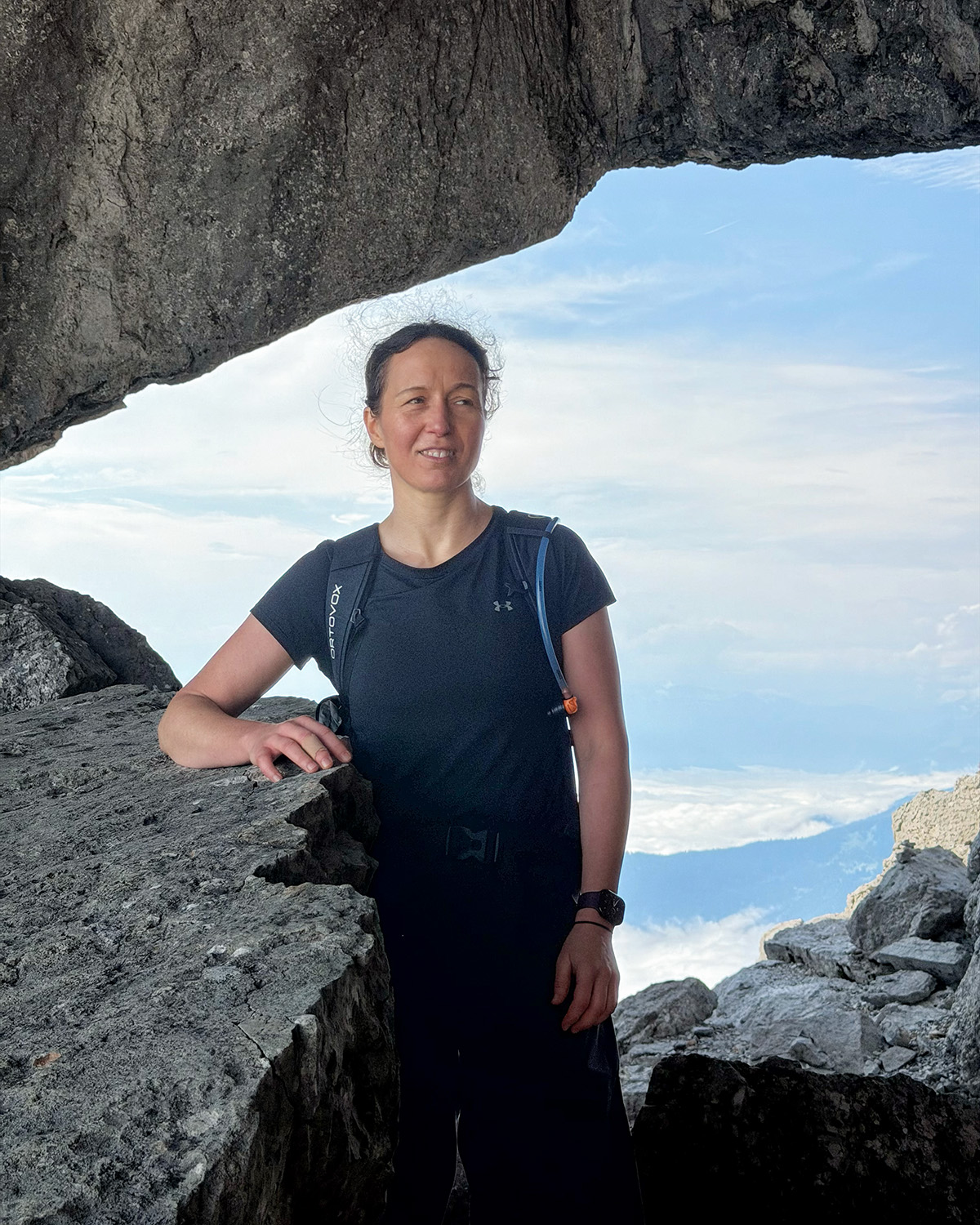
Karin Pietruska
Founder
Flyora brings together interests that have shaped my work for more than two decades: how people think and learn, how biological and technical systems can be understood through data, and how technology can turn that understanding into something useful.
My background spans cognitive science and neuroscience, clinical research and medical-device development, biosignal analysis, machine learning, and software and data engineering. I have worked in academic research and industry, led clinical studies, contributed to the development and validation of medical technologies, and continued to deepen my engineering practice as the questions I wanted to solve became increasingly technical.
I founded Flyora to bring those perspectives together. What continues to interest me most is how people and systems learn, adapt and improve, and how technology can support that process without taking away autonomy.